If you find yourself constantly topping up your boiler pressure, you’re not alone. A slow drop in pressure is a common issue in modern sealed heating systems. While it might seem like a minor hassle, it usually signals an underlying problem that needs attention. Ignoring it can lead to boiler inefficiency, frequent breakdowns, or even complete system failure. Understanding why your boiler pressure keeps dropping can help you spot issues early and avoid costly repairs.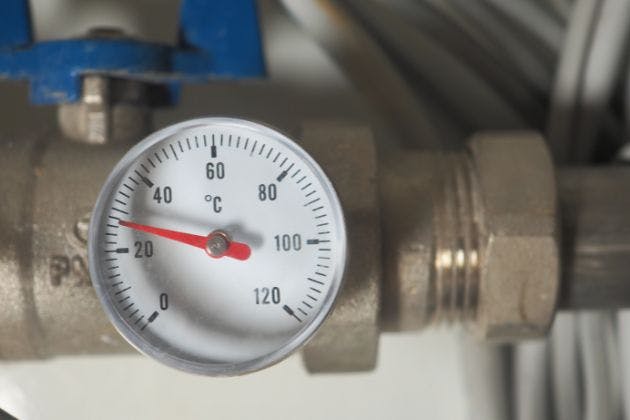
Normal boiler pressure and when to worry
On most domestic boilers, the pressure gauge should sit around 1.0 to 1.5 bar when the system is cold. As the heating comes on and water expands, it usually rises to around 2.0 bar or just above.
If you keep seeing the pressure slowly fall back towards zero, or you are topping up every few days or weeks, that is a warning sign. Equally, if the pressure shoots up towards 3 bar when hot, then drops again when the boiler cools, something is off in the system.
Safe checks before you call an engineer
There are a few simple, safe checks most homeowners can do without taking the boiler apart or touching the gas supply. These checks can help you understand what might be going on and give your engineer useful information.
Check the gauge cold and hot: Note the reading when the system is off and cold, then again after the heating has been on for 30–60 minutes.
Look for damp patches: Check under radiators, around valves, and under visible pipework for any signs of moisture or staining.
Check the copper discharge pipe outside: This usually terminates outside near the boiler. It should be dry when the system is running normally.
Note any error codes or flashing lights: Take a photo of the boiler display if it shows a code or warning symbol.
If you spot water near electrical components, smell gas, or the boiler repeatedly locks out, stop there and turn the boiler off at the control. Do not attempt further checks yourself.
Frequent causes of boiler pressure loss
Most pressure drops come down to a few common problems. Some are relatively minor, while others need prompt attention from a Gas Safe engineer.
Small leaks on radiators and valves
Even a tiny weep from a radiator valve or joint can slowly drop the pressure over time. Often you will see a faint green or white crust on copper joints, or a brown water mark on skirting boards or flooring below a radiator.
These leaks are not always dramatic drips. They can evaporate as they appear, so you may just notice a slightly damp patch or rust marks at the bottom of a radiator. Do not ignore these, as constant topping up brings fresh oxygen into the system, which encourages corrosion.
Pressure relief valve (PRV) discharging
The pressure relief valve is a safety device that protects your boiler if pressure gets too high. It usually discharges through a small copper pipe that runs from the boiler to an outside wall.
If this pipe is warm and dripping when the heating is on, or you can see a lime scale stain on the wall below, your PRV may be passing. Once a PRV has opened, it often fails to reseal properly, leading to a gradual pressure loss that cannot be fixed by simply topping up.
Expansion vessel issues
Your boiler or system usually has an expansion vessel, which absorbs expansion as water heats up. Inside is a rubber membrane with air or nitrogen on one side and system water on the other.
If the vessel loses its charge or the membrane splits, the system has nowhere to absorb that expansion. The pressure will climb too high when hot, open the PRV, and then the boiler cools down to a lower pressure than before. This cycle repeats until the pressure is too low to run safely.
Faulty or incorrectly used filling loop
The filling loop is the braided hose or built-in connection you use to top up the boiler. The valve on it must be fully closed once you have finished repressurising.
If the valve is left slightly open or the internal seals are worn, it can cause pressure to creep up and down, or introduce fresh water constantly. This not only upsets the pressure but also increases corrosion and sludge in the system over time.
Recent radiator bleeding and trapped air
Bleeding radiators lets out trapped air, but it also lowers system pressure because you are effectively releasing water from the circuit. If you have recently bled several radiators and did not repressurise afterwards, the boiler may now be sitting too low.
Air can also enter the system through leaks or component faults. Trapped air causes gurgling sounds, cold spots on radiators, and can make pressure readings behave unpredictably. Persistent air issues point to a deeper problem that needs investigation.
Local note for Essex homes
In and around Essex, hard water is a common issue. Minerals in the water can contribute to scale build-up inside boilers and components over time, which may shorten the life of parts like PRVs and expansion vessels.
Sludge from corrosion can also clog radiators and pipework, putting extra strain on the system. Regular boiler servicing and periodic system cleaning or treatment can help manage these local conditions and reduce the risk of frequent pressure problems.
When not to attempt DIY fixes
While basic checks are fine, there are clear situations where you should stop and call a professional. Anything that involves opening the boiler casing or touching gas components must be left to a Gas Safe registered engineer.
Do not attempt DIY if you notice any of the following:
Gas smell anywhere in the property or around the boiler
Repeated boiler lockouts or error codes coming back after resets
Visible water near electrics, controls, or inside the boiler casing
In these cases, turn the boiler off and seek professional help as soon as possible for safety.
When to call a Gas Safe engineer
If your pressure keeps dropping despite topping up, or you are having to repressurise more than once every few months, it is time to book a proper diagnosis. An engineer can test the expansion vessel, check the PRV, inspect for hidden leaks, and assess the overall health of your system.
Before you call, it helps to have a few details ready:
Make a note of your boiler brand and model number, which is usually on the front panel or inside the drop-down flap. Write down the cold and hot pressure readings, any error codes you have seen, and any recent work such as new radiators, powerflushing, or system alterations. Photos of the gauge, discharge pipe and any damp patches are also useful.
Repair today, fewer problems tomorrow
Resolving a dropping pressure issue is not just about convenience. Leaving it unchecked can lead to internal corrosion, sludge build-up and premature breakdowns. A proper boiler repair will fix the root cause rather than just masking the symptoms with constant top-ups.
Once sorted, consider arranging regular boiler servicing to keep an eye on components like the expansion vessel and PRV, especially in hard water areas like Essex. If you are nearby, our new Chelmsford servicing location makes it easier to keep your system looked after.
Book your repair visit today
If your boiler pressure keeps dropping and you’re tired of topping it up, contact He@Heating Ltd on 07956 575049 or fill out our contact form to book a repair visit. We’ll diagnose the cause, carry out safe, professional repairs, and help you set up an annual service plan to reduce the chances of the same problem returning.