If you’ve noticed water pooling under your boiler at home, it can be alarming—especially on a chilly Chelmsford morning. A leaking boiler isn’t just inconvenient; it can signal serious issues that need prompt attention. Ignoring the problem could lead to pressure loss, electrical hazards, or even a complete breakdown. But by staying calm and following a safety-first approach, you can protect your home, prevent further damage, and get the expert help you need quickly and confidently.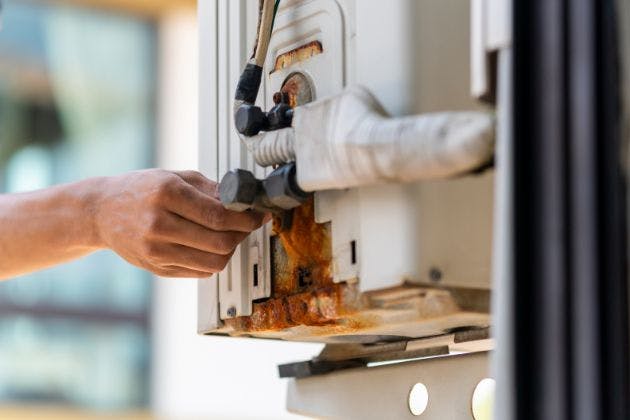
What a leaking boiler can indicate
Boilers are sealed systems, so any visible water suggests something is not quite right. Some causes are relatively minor, while others point to wear, corrosion or over-pressure that needs prompt attention.
One common cause is the pressure relief valve releasing water if the system pressure has climbed too high. This protects the boiler, but regular discharge means something is wrong with the pressure control. Failed seals and connections around pumps, valves or the heat exchanger can also allow water to escape.
Older boilers can suffer from internal corrosion, leading to small pinholes and persistent leaks. Modern condensing boilers may leak if there is a blockage or break in the condensate pipe, especially in very cold weather. Whatever the cause, the leak is a warning that the boiler needs a proper check.
Risks of ignoring a leaking boiler
It can be tempting to put a towel down and hope the problem goes away, but leaving a leak untreated often leads to bigger issues. Even a slow drip can damage floors, units and skirting boards over time.
Loss of water usually means loss of pressure, which can cause your boiler to lock out or fail. Water near electrical components is also a concern, as it can lead to short circuits or tripping the electrics, and in the worst cases, a safety hazard.
There is also the risk that the underlying fault is worsening out of sight, such as internal corrosion or a failing expansion vessel. Acting early is almost always cheaper and safer than waiting for a breakdown.
Immediate safe actions you can take
Your priority is safety: keep people, pets and electrics safe, and avoid doing anything that could damage the boiler further. You do not need to be technically minded to take a few simple, sensible steps.
Stay safe around electrics: Mop up any water that is near plugs, sockets or extension leads and move them away from the area if you can do so safely.
Check how serious the leak is: Is it an occasional drip, a steady trickle or a constant flow? This will help when speaking to an engineer.
Look, but do not open: You can look underneath and around the boiler casing, but do not remove the cover. Only a Gas Safe engineer should work inside the boiler.
If water is actively dripping from the boiler or pipework, and especially if it is close to electrical components, it is usually safest to turn the boiler off at the boiler control or main switch. Allow radiators and hot water to cool before touching any pipework.
If you feel confident and know where it is, you can turn off the boiler’s isolation valve on the cold water inlet to limit further water loss. Do not attempt this if you are unsure which valve to touch. Never start undoing fittings or trying to tighten connections yourself.
Checking the boiler pressure safely
Most modern boilers have a pressure gauge on the front. On a typical sealed system, the pressure when cold should usually be around 1.0 to 1.5 bar, but check your manual for the exact range.
If the gauge is dropping below 1.0 bar, the system may keep losing pressure because of the leak. On the other hand, if the gauge is frequently above 2.5 or 3.0 bar, excess pressure could be causing the pressure relief valve to discharge water. Do not try to fix pressure problems yourself; simply note what you can see and pass this on to the engineer.
What a Gas Safe engineer will typically check
When you book a professional visit, the engineer will carry out a methodical inspection to find the cause of the leak. This avoids guesswork and helps ensure the problem is properly sorted, not just patched.
Initial visual and safety inspection
The engineer will start with a visual check around the boiler and connected pipework, looking for obvious signs of water staining, corrosion or loose joints. They will also confirm that electrical components are dry and safe before working further.
Inside the boiler casing, they will look for signs of internal leaks, scaling or rust, as well as checking seals and gaskets around pumps, valves and the heat exchanger. Any signs of overheating or damage will be noted.
Pressure and system checks
A pressure test helps the engineer understand whether the system is losing water and at what rate. They may isolate parts of the system, such as the boiler, radiators or underfloor loops, to track down where the leak is coming from.
The pressure relief valve (PRV) and expansion vessel are key components here. The engineer will check the PRV for debris or failure and test whether the expansion vessel has lost its air charge or has a damaged diaphragm, both of which can lead to repeated over-pressure and leaking.
Condensate route and drainage
On a condensing boiler, the condensate pipework is another common source of issues. The engineer will confirm that the condensate trap and pipes are clear and correctly routed to a suitable drain.
External condensate pipes can freeze in winter or become blocked, forcing condensate back into the boiler and causing leaks or lockouts. If needed, the engineer may lag or reroute pipework to reduce the chance of it happening again.
Identifying worn or damaged components
Once the main source of the leak is found, the engineer will assess which components need repair or replacement. This might be a perished seal, a cracked fitting, or, in more serious cases, a section of corroded pipe or heat exchanger.
They will also check whether the fault links to wider issues, such as poor system water quality, a lack of inhibitor, or an undersized expansion vessel. Addressing these helps reduce the risk of future leaks and breakdowns.
Information to note before you call for help
Having a few details ready can make your repair visit quicker and more efficient. It helps the engineer bring the right parts and understand what they are likely to find.
Boiler make and model: You can usually find this on the front panel, a data plate under the boiler, or in your manual.
Error codes or warning lights: Note down any codes on the display and whether they appear all the time or come and go.
Where the leak seems to be: Under the boiler, from a visible pipe, near a valve, or from an external pipe such as the condensate or pressure relief outlet.
It is also worth noting when you first spotted the leak, whether it is constant or only appears when the heating or hot water is running, and if the boiler pressure has been dropping or rising. Photos of the leak area can be very helpful to share with the engineer before they arrive.
Preventing future boiler leaks
Once your boiler is repaired, a bit of ongoing care can go a long way towards avoiding repeat issues. Regular servicing keeps an eye on seals, connections and internal components before they fail.
Keeping the system water clean, with the correct level of inhibitor, helps reduce corrosion and sludge that can damage parts from the inside. If you have had frequent pressure problems, your engineer may suggest checks on the wider heating system or fitting additional protection such as filters.
Need help with a leaking boiler in Chelmsford?
If your boiler is leaking water, do not ignore it or attempt a DIY fix. Turn the boiler off if there is any risk to electrics, note the details described above, and arrange a prompt visit from a Gas Safe engineer.
HE@HEATING LIMITED can inspect the leak, carry out safe repairs and advise on ongoing maintenance to keep your heating running reliably. To book a Gas Safe boiler repair in Chelmsford, call HE@HEATING LIMITED on 07956575049.
For more information on ongoing care, you can also visit our boiler repair and boiler servicing pages to see how regular checks help prevent future leaks and breakdowns.