If your boiler keeps turning off unexpectedly, it’s not only frustrating but can also cause concern about your home’s heating and hot water. The good news is that most of these shutdowns happen due to a handful of common issues. Many of these problems you can quickly spot and safely check yourself before needing to call a heating engineer. Taking these simple steps could save you time and money while keeping your boiler running smoothly.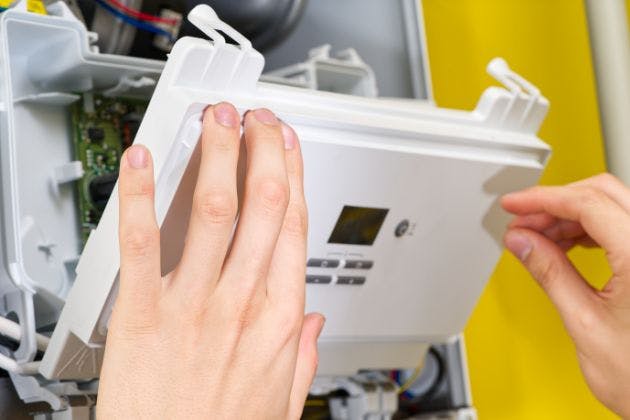
What makes a boiler shut itself down?
Modern boilers are designed to switch off automatically if something is not right. This is a safety feature that helps prevent damage to the appliance and protects your home.
When the boiler senses a fault, it may lock out completely with an error code, or it may run for a while, then cut out and restart. Repeated shutdowns are a signal that something needs attention rather than something you should ignore.
Common causes of intermittent boiler shutdowns
Although only a Gas Safe registered engineer should open and repair your boiler, it helps to understand the typical reasons for it turning off. This can also guide what you safely check as a homeowner.
Low system pressure
Your boiler needs the right amount of water pressure to circulate hot water through the system. If the pressure is too low, the boiler may overheat or detect a fault and switch off to protect itself.
Low pressure is often caused by small leaks in the system, recently bled radiators, or a faulty pressure relief valve. You will usually see a pressure warning on the display or a gauge reading below the recommended level when the system is cold.
Low system pressure is causing lockouts
Overheating from poor circulation or airlocks
Faulty thermostats, sensors, or controls
Sticking pumps and circulation issues
Blocked condensate pipes in cold weather
Ignition or flame sensing problems
Overheating and poor circulation
If water cannot flow freely around your heating system, the boiler can quickly get too hot. When this happens, an overheat thermostat will cut the boiler off for safety.
Poor circulation is often linked to sludge in the radiators, closed or stuck valves, air in the system, or a failing pump. You might notice some radiators staying cold or only warming at the top.
Faulty thermostat, sensors, or controls
Your boiler depends on temperature sensors, thermostats, and the programmer to know when to run and when to stop. If one of these gives the wrong signal, the boiler may keep shutting down early or not run when you expect.
Room thermostats that are in the wrong place, such as near a radiator or in direct sun, can also cause strange on and off behaviour. Mis-set timers are another frequent cause of intermittent operation that is easy to overlook.
Pump problems and circulation faults
The pump moves hot water from the boiler around your radiators and back again. If it is sticking, worn, or set incorrectly, the boiler can overheat or shut down soon after firing.
You may hear unusual humming or grinding noises from the pump area, or notice that radiators furthest from the boiler stay cool. A professional can test whether the pump is running at the correct speed and replace it if needed.
Blocked condensate pipe in cold weather
Condensing boilers produce condensed water that drains away through a plastic pipe, often run outside. In cold weather, this pipe can freeze or become blocked, forcing the boiler to shut down.
Signs include gurgling noises, water dripping from the boiler casing area, or an error code related to the condensate. The boiler will usually refuse to fire properly until the blockage is cleared.
Ignition and flame sensing issues
If the boiler struggles to light or loses the flame, it will quickly turn itself off. This protects against unburnt gas building up inside the unit.
Causes include dirty or faulty ignition electrodes, a weak gas supply, or a failing flame sensor. These are not things to tackle yourself, but they are common findings during professional diagnostics.
Safe checks you can do at home
While repairs should always be left to a Gas Safe engineer, there are a few straightforward checks most homeowners can carry out safely. If in doubt at any point, stop and seek professional help.
Check the pressure gauge
Look at the pressure gauge on your boiler when the system is cold. Most systems are designed to sit around 1.0 to 1.5 bar when not running, but always check your manual for the correct range.
If the pressure is very low or keeps dropping, do not keep topping it up every day. This usually means there is an underlying issue that needs investigating by an engineer.
Reset the boiler once only
If your boiler has locked out, you can usually press the reset button once after checking that there are no obvious leaks, burning smells, or other safety concerns. Sometimes a one-off fault will clear and not return.
If the boiler cuts out again or needs frequent resets, this is a red flag. Repeatedly resetting a faulty boiler can mask a developing problem and is not a safe long-term solution.
Check radiators, controls, and condensate pipe
Walk around and check whether all radiators are warming up evenly. Cold spots or entire radiators staying cool while others are hot can point to circulation issues that an engineer will need to resolve.
Make sure your programmer and thermostats are set correctly, with the time and schedules accurate. Simple control errors can sometimes look like a boiler fault when the appliance is actually doing what it has been told.
In cold weather, gently check the external condensate pipe for obvious ice or blockages. If it feels frozen, you can often thaw it carefully using warm (not boiling) water poured over the outside of the pipe, taking care not to slip or scald yourself.
Things you should never do with a faulty boiler
It can be tempting to try to fix a cutting-out boiler yourself, especially if it seems like a minor problem. However, gas appliances are complex and need specialist knowledge to work on safely.
To keep your home and family safe, avoid the following:
Do not remove the boiler case or covers
Do not bypass or bridge any safety devices or sensors
Do not adjust gas valves or internal components
Do not ignore burning smells, sooting, or signs of scorching
Only a Gas Safe registered engineer is legally allowed to work on internal gas components. If anything feels unsafe, turn the boiler off and ventilate the area while you wait for help.
What a professional boiler diagnostic involves
A qualified engineer will start by listening to your description of the problem, when it happens, and any error codes you have seen. They will then run a series of checks on gas pressures, electrical connections, sensors, pumps, and controls.
They may test the water quality in your system, check radiators and valves, and inspect the condensate route. The aim is to find the root cause of the shutdowns rather than just clearing the fault temporarily.
Once they have identified the problem, they can recommend repairs, parts replacement, or system cleaning, and advise on ongoing maintenance to keep your boiler running reliably.
Ready to get help with your boiler cutting out?
If your boiler keeps turning off, it is safer and usually cheaper in the long run to get it checked properly. Persistent shutdowns are a sign that something needs attention, not a quirk to live with.
For expert boiler repair and reliable central heating services, contact He@Heating Limited on 07956575049. A professional diagnosis and repair will help keep your home warm, efficient, and safe through the colder months.