If your boiler suddenly stops working on a cold day, it’s often due to a frozen condensate pipe. This pipe carries away the acidic water produced during heating, and when it freezes, it blocks drainage and causes the boiler to shut down as a safety measure. Recognising the warning signs early and knowing how to safely thaw the pipe can get your heating back on quickly, prevent damage to your system, and reduce the risk of future freezes. Acting fast also means you stay warm and avoid costly emergency repairs.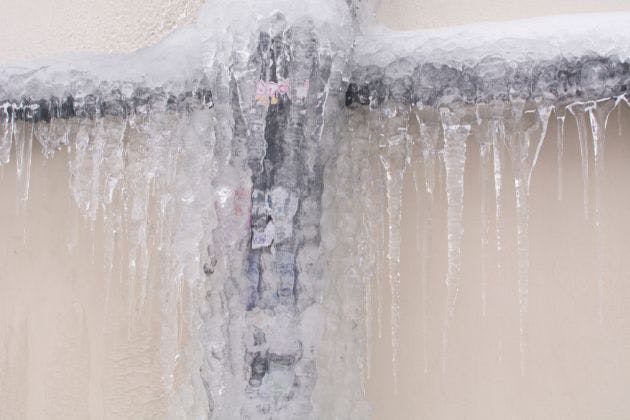
What a condensate pipe does
Modern condensing boilers produce a small amount of acidic water called condensate as they run. This liquid needs to be carried away from the boiler and into a drain, which is what the condensate pipe is for.
Part of this plastic pipework often runs outside, even if only for a short distance to reach a drain. It is this external section that is most at risk of freezing in cold weather.
When the condensate pipe freezes, the boiler’s built-in safety systems detect the blockage. To protect itself from damage, the boiler usually shuts down and shows a fault rather than trying to run as normal.
How a condensate pipe can freeze
Condensate drips slowly through the pipe, which means the flow is often just a trickle. In low temperatures, this trickle can gradually freeze, starting at the outlet where it meets the outside air.
Over time the ice builds up inside the pipe until it blocks the flow completely. Once this happens, condensate backs up to the boiler, triggers a sensor and the boiler locks out.
Long exposed pipe runs or small diameter pipes outdoors increase the risk of freezing
Poor or missing insulation around external pipes allows heat to escape quickly
Shaded, windy spots such as alleyways can make pipes freeze faster
Older installations are particularly prone to freezing if modern guidance on pipe sizing and insulation was not followed at the time.
Clear warning signs of a frozen condensate pipe
Although every boiler is different, several warning signs are strongly linked to a frozen or blocked condensate pipe. Recognising these early can save time and worry.
Gurgling or bubbling noises
You may hear gurgling or bubbling from the boiler or the condensate pipework as the boiler tries to drain away water. These sounds often occur just before the boiler shuts down completely.
If you notice new, persistent gurgling during cold weather, treat it as a clue that the condensate route may be restricted or starting to freeze.
Error codes and warning lights
Many boilers display specific fault codes when the condensate is blocked. The exact code depends on the brand and model, but common ones indicate a “condensate pipe frozen” or “condensate blocked” condition.
If your boiler manual mentions condensate-related fault codes and they appear in freezing conditions, a frozen pipe is very likely. Some boilers simply show a flashing warning light instead of a code.
Boiler not firing or cutting out
With a frozen condensate pipe, the boiler often tries to start, makes a few noises, then cuts out. You may see the flame symbol appear briefly on the display, then disappear as the boiler locks out.
In other cases, the boiler refuses to fire at all and immediately goes to a fault condition. If there is power but no heating or hot water, the condensate is one of the first things to check in cold weather.
Visible ice on the external pipework
A very clear sign is ice on the outside of the condensate pipe where it runs outdoors. This can look like a white frosty coating or a solid icicle forming at the outlet.
If you can see a bulge of ice or feel a very hard, solid section within the plastic pipe, it is usually a frozen blockage that needs careful thawing.
Safe ways to thaw a frozen condensate pipe
It is often possible to safely clear a frozen condensate pipe yourself, provided you can access the external section of pipe at ground level. Take your time and never force anything.
Warm water method (not boiling)
Fill a jug or watering can with warm tap water. It should be comfortably hot to the touch, but not boiling, as very hot water can damage or crack the plastic pipe.
Slowly pour the warm water along the length of the exposed pipe, starting from the outlet and working back towards the wall. Repeat gently until the ice melts and water can flow freely again.
Using a hot water bottle or heat pack
Another safe option is to hold a hot water bottle or a reusable heat pack against the frozen section of pipe. Wrap it in a cloth to avoid direct contact if it is very hot.
Leave it in place for 10 to 15 minutes at a time, then move it along the pipe. This gradual, gentle heat allows the ice inside to thaw without shocking the plastic.
Towel wrap technique
You can also wrap an old towel around the frozen pipe, then pour warm water over the towel so it soaks through. The towel holds the warmth against the pipe for longer.
Replace or re-wet the towel with fresh warm water as it cools. Keep checking for signs that the ice has cleared, such as water dripping from the outlet.
Methods you should avoid completely
In an attempt to get the heating back on quickly, it can be tempting to use more aggressive methods. These can be dangerous or cause damage and should not be used.
Never use an open flame such as a blowtorch, lighter or gas burner on the pipe. These can easily melt plastic, damage nearby materials and create a serious fire risk.
Do not pour boiling water from a kettle directly over the condensate pipe. The sudden temperature change can crack the pipe, leading to leaks that are more complex and costly to repair.
Avoid hitting or bending the pipe to break the ice. Any physical force can split joints, dislodge fittings or damage internal components that are not visible.
Resetting the boiler after thawing
Once the pipe is thawed and you can see or hear water draining freely, you can usually reset the boiler. Most boilers have a dedicated reset button or a specific reset procedure in the manual.
Press the reset button or follow the instructions provided for your model. The boiler should go through its start-up sequence and fire normally if the blockage has cleared completely.
If the fault code persists, or the boiler still refuses to fire after a couple of attempts, stop trying and move on to getting professional help.
When to call a heating engineer
Although many frozen condensate issues can be resolved safely at home, some situations need an expert. Knowing when to stop and call for help will protect both your boiler and your safety.
Freezing keeps happening, even in only mildly cold weather
The frozen section is high up, on a roof, or otherwise unsafe to reach
You suspect a blockage inside the property rather than the outdoor section
The boiler will not restart or still shows a fault after careful thawing
A Gas Safe registered engineer can check the full condensate route, test the boiler, and make practical changes to reduce the risk of future problems.
Practical steps to prevent future freezing
Once you have dealt with a frozen condensate pipe, it makes sense to reduce the chance of it happening again. A few permanent improvements can make a big difference.
Improved insulation for external runs
Any external part of the condensate pipe should be properly lagged with weather-resistant insulation. This helps keep the temperature of the pipe above freezing during cold snaps.
Your engineer may also recommend increasing the pipe diameter outdoors. Larger pipes are less likely to freeze solid and are now standard good practice on modern installations.
Routing adjustments and fall
Where possible, the condensate should run internally for as much of its length as possible before it exits the building. Rerouting the pipe indoors can greatly lower freezing risk.
The pipe should also have a steady fall so condensate does not collect and sit in low spots. Standing water in a sagging pipe is far more likely to freeze.
Regular servicing and checks
During routine boiler servicing, ask your engineer to check the condensate pipework, traps and fittings. They can make sure joints are sound, routes are sensible and insulation is intact.
Regular servicing also helps pick up early signs of other issues that might present in similar ways to a frozen condensate, such as blocked internal traps or sensor faults.
Need help with a frozen condensate pipe?
If you are in Chelmsford, Dunmow, Bishop's Stortford or Saffron Walden and you are struggling with a frozen condensate pipe or a boiler that will not restart, professional help is close by. He@Heating Limited can safely diagnose the fault, clear blockages and advise on long-term fixes to keep your boiler running reliably.
To arrange a repair visit or book a boiler service, call He@Heating Limited on 07956575049. You can also learn more about our boiler repair and boiler servicing options and request a convenient appointment.