Understanding your heating controls is one of the simplest ways to reduce energy bills and keep your home cosy all year round. Whether you’re in Chelmsford, Dunmow, Bishop's Stortford, or Saffron Walden, knowing how your system works helps you spot issues early and explain problems clearly when you call a heating engineer. This means faster fixes and better service, saving you time and money.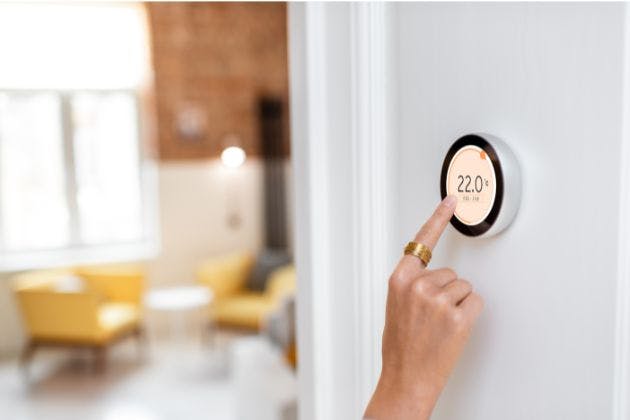
What each control does (simple system “diagram”)
Most homes use three main controls that work together like a chain:
Programmer/timer: tells the boiler when to run
Room thermostat: tells the boiler if heat is needed
TRVs (radiator valves): set how warm each room gets
A simple way to picture it:
Programmer ON → Room thermostat calling for heat → Boiler fires → TRVs share the heat between rooms.
If any part of that chain is off or set badly, you can get problems like heating not coming on, never turning off, or one room boiling while others are cold.
Programmer/timer: role, location and common mistakes
What the programmer does
The programmer or timer is the master on/off schedule for your heating, and often your hot water too. It tells the boiler what times each day it is allowed to run.
It does not control the temperature. It simply gives permission: during “on” times the boiler can run if the thermostat asks for heat, and during “off” times it should stay off.
Where it is usually located
Programmers are often found near the boiler, in the airing cupboard, by the front door or in a hallway. Some modern systems use a wireless controller unit that sits on the wall like a thermostat.
Common programmer mistakes
One frequent issue is leaving the programmer on “constant” or “24 hours,” so the boiler is always allowed to run. If the room thermostat is also turned high, the heating may seem to stay on all day.
Another mistake is very short on-periods. If you only give the system 20 minutes, radiators may barely warm up before it switches off again, which can feel like the heating is not working.
Room thermostat: role, location and common mistakes
What the room thermostat does
The room thermostat measures the air temperature and turns the boiler on or off to maintain your chosen level. When the room is colder than the set temperature, it asks the boiler for heat. Once the room reaches that temperature, it tells the boiler to stop.
Think of it as your “main reference room.” If that room is happy, the boiler gets told to rest, even if other rooms are still cooler.
Where it is usually located
Traditionally, the thermostat sits in a hallway, living room or sometimes the dining room. It should be on an internal wall, away from draughts, direct sunlight and radiators.
Common thermostat mistakes
A very common problem is having TRVs turned down or off on the radiators in the same room as the thermostat. The radiator then never heats that room properly, so the thermostat keeps calling for heat and the rest of the house overheats.
Another issue is blocking the thermostat with curtains, furniture or a nearby heat source like a lamp. It reads the temperature wrongly and turns the boiler off too early or keeps it on too long.
TRVs (thermostatic radiator valves): role and best placement
What TRVs do
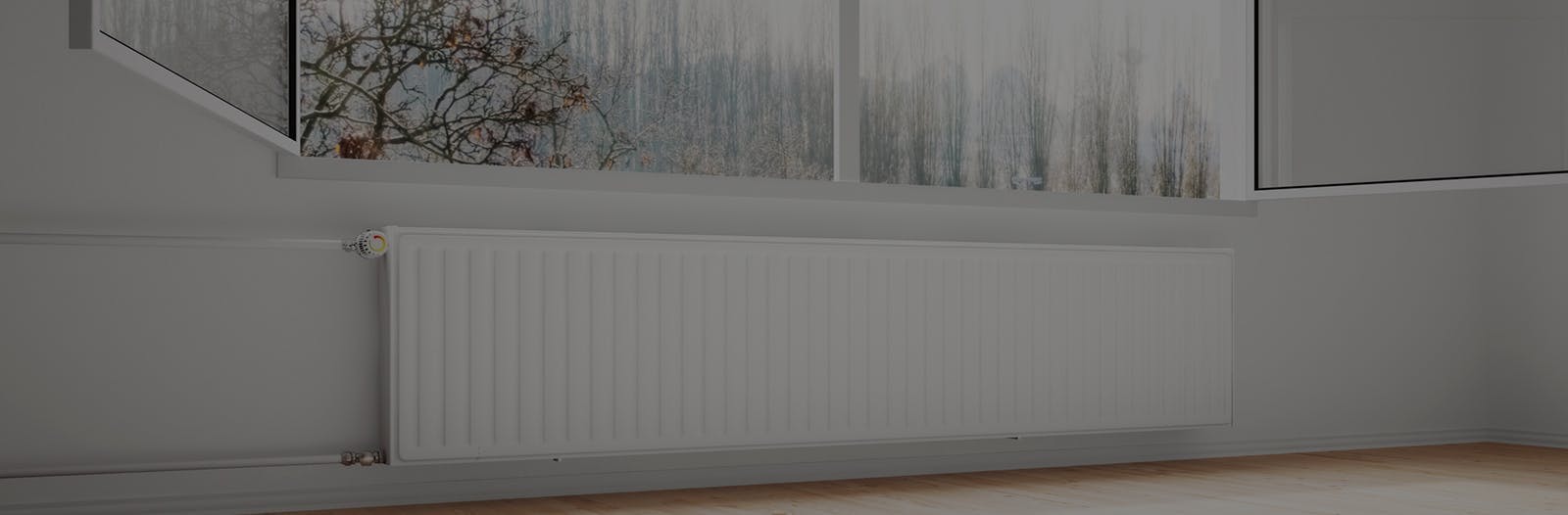
TRVs are the numbered controls on individual radiators. They do not talk directly to the boiler. Instead, they control how much hot water flows through each radiator, based on the temperature in that room.
This lets you keep bedrooms cooler, living rooms warmer and spare rooms on a low background setting without changing the whole house temperature.
Where TRVs are usually located
TRVs sit at one end of the radiator, often with numbers from 1 to 5. Many homes now have TRVs on most radiators, but not on the radiator in the same room as the main thermostat.
If you do have a TRV on the same radiator as the thermostat, it should normally be set to a high number so that the thermostat is the main control for that room.
Common configuration mistakes that cause problems
Heating stays on too long
If your heating seems to never switch off, look first at the programmer. If it is set to “constant” and the room thermostat is turned up high, the boiler has no reason to rest.
Also check the thermostat room: if that radiator is turned off at the TRV, the room never gets warm enough, so the thermostat keeps asking for heat and all other rooms continue to warm up.
Some rooms too hot, others too cold
If the thermostat is in a very cool hallway with no TRV, it may keep calling for heat while already-warm rooms overheat. In this case, adjust TRVs to lower settings in warm rooms and slightly higher in cooler ones.
Keep internal doors open during heating periods so the thermostat gets an average sense of the house temperature rather than being isolated.
Best-practice settings for comfort and efficiency
Programmer timings
Most homes are comfortable with two or three heating periods per day, for example morning, late afternoon and evening. Aim to start the heating 30 minutes before you need the rooms warm, then turn it off 30 minutes before you go to bed.
If you are out all day, there is usually no need to keep the heating on continuously. A shorter early-evening period is often enough, especially in milder weather.
Room thermostat settings
For many people, 19–21 °C in living areas is a good balance between comfort and running cost. Try setting your thermostat and then leaving it alone, rather than constantly fiddling with it.
Turning the thermostat up will not heat the room faster, it just tells the system to aim for a higher final temperature. If you are cold, check TRVs and programmer times before cranking it up.
TRV settings by room
Use TRVs to fine-tune room comfort:
Living room: mid to high setting (for example 3–4)
Bedrooms: lower setting (for example 2–3)
Spare rooms/hallways: low background (for example 1–2)
Bathroom: comfortable but not roasting, often similar to bedrooms
Wait a day after each adjustment so you can feel the effect properly before changing again.
Troubleshooting: heating will not turn off
First, check the programmer. Is heating set to “on,” “constant”, or “24 hours” when it should be on “auto” or “timed”? If so, switch back to timed mode and see if the boiler then rests at the right times.
Next, turn the room thermostat down until it clicks, or to its minimum setting. If the boiler keeps running for more than 15–20 minutes, there may be a wiring, valve or control fault rather than a settings issue.
Also check the thermostat room radiator: if the TRV is off or very low, the room never reaches the set temperature, so the thermostat keeps calling for heat. Turn that TRV higher and see if the system behaves more normally once the room warms up.
Troubleshooting: heating will not come on
Make sure the programmer is actually telling the system to heat. Check the current time and day are set correctly, and that the heating channel is set to “on” or within an active timed period.
Then turn the room thermostat up a few degrees above the current room temperature and listen for a click. If there is no click and no boiler response, the thermostat or its batteries may be at fault.
If some radiators stay stone cold while others are hot, the issue may be with individual TRVs or valves rather than the controls chain. If all radiators are cold despite correct programmer and thermostat settings, it is time to call a heating engineer.
Smart controls, zoning and compatibility
Smart thermostats and TRVs can give more precise control, such as different temperatures in different rooms at different times. This is called zoning and can be especially helpful in larger or multi-storey homes.
However, not every boiler works with every smart control. Some modern boilers use special communication with matching controls, and mixing brands can lose efficiency features or simply not work.
Before investing, it is well worth getting advice from a qualified engineer who understands both your boiler and the control system you are considering.
Need help with heating controls in your area?
If you are in Chelmsford, Dunmow, Bishop's Stortford or Saffron Walden and your heating will not behave, professional checks can quickly sort out control issues, improve comfort and help cut your gas use.
HE@HEATING LIMITED can test your programmer, thermostat and TRVs, set them up correctly, and advise on smart upgrades. For help with heating controls, central heating services or boiler repair, call HE@HEATING LIMITED on 07956575049 to book an appointment.